
A Life & Death Tale of Minds & Meaning
Once upon a time, a ship sunk at sea, and five survivors ended up adrift in a small lifeboat. They were a curious mix of total strangers: a scientist, an engineer, an artist, a philosopher, and a priest. After several miserable days adrift, a storm approached, and it became obvious that the boat was too small to stay afloat with all five passengers. They agreed that if any were going to survive, one of them would have to go.
The philosopher suggested that each one explain his views on the purpose of life; then they would vote and rank the five worldviews, best to worst. The person with the lowest-scoring worldview could be presumed to have the least to lose and therefore should go overboard.
Of course, they all hated the idea, but after a few hours of frantically bailing water, they faced the obvious fact that all five were soon to perish, and they agreed to the philosopher’s plan.
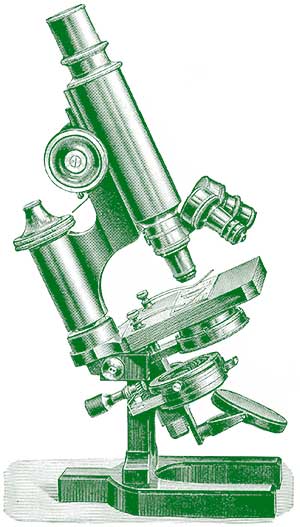
The Scientist
The scientist went first. “Scientists are brilliant and highly educated people who have dedicated their lives to finding truth by breaking reality down into its tiniest, most fundamental pieces to understand how the pieces behave. This has resulted in one discovery after another. We now know that reality is made of molecules, and molecules are made of atoms, which are made of protons, neutrons, and electrons. Protons and neutrons are made of tiny fields of pure energy called quarks.
“All brilliant minds agree that it is an amazing freak random accident that these pieces fit perfectly together to create us. Science has proven that there can be no purpose or meaning to life, but since infinity is really big, and everything has to happen somewhere, here we are, in this amazingly huge assembly of meaningless, purposeless pieces.
“These discoveries are the greatest achievement of mankind. Scientists who comprehend the details of them are the only people qualified to understand reality. Because of your lack of a scientific education you are not qualified to comprehend these facts or even to critique my worldview. So I deserve a place in the boat.”
The Engineer
The engineer spoke next. “You are totally wrong. Yes, discovering all the pieces was a magnificent achievement. However, you have been trained to be a reductionist, to break everything into its fundamental pieces and only look for meaning in those tiny pieces. This is an absurd approach to trying to understand the purpose of any system. And the universe and everything in it is an amazingly complex system.
“By worshipping the pieces, you have adopted exactly the wrong perspective to be able to understand the purpose of the whole. Engineers, however, are trained to design systems. From your ‘pieces,’ we engineers create more complex designs to assemble systems capable of more complex functions. So the purpose of life can only be appreciated by understanding the design of reality as a system. It is a magnificent, multi-layered design that starts with pure energy in the form of quantum fields and radiant energy. That energy flows through amazingly intricate and precise layers of logic-based rules to emerge as woven patterns of energy in the form of atoms and molecules and oceans and planets and stars and galaxies.
“The information processing takes a giant, if not miraculous, leap from the logic-based rules controlling the pieces to the unbelievably complex programs stored in DNA molecules. Life first emerged as microscopic, software-controlled systems within living cells and then progressed to become more and more complex, multicellular, information-processing lifeforms like worms and wombats and baboons and babies. All of this is very intelligently designed to achieve the desired goal: conscious, intelligent minds.
“So science is a wonderful tool, but you would be a fool to follow the scientists in believing in their ‘purposeless pieces’ and their ‘accidental universe.’ Only an engineer capable of understanding the amazing complexity of this most elegant and sophisticated design could possibly understand reality and the purpose of life.
“I clearly deserve a place in the lifeboat ahead of the scientist.”
The Artist
The artist smiled. “I always hated math. As I was listening, I was thinking that both of you probably sat in classrooms, intensely studying math into your early twenties or later and then went into a lab or cubicle so you could play with math for the rest of your life. You both have led one-dimensional lives, and so you have not experienced anything close to the total spectrum of beauty available to those of us who grab life by the horns and experience its beauty to the fullest.
“Consequently, you are both totally wrong. Life is not about the scientist’s worship of fundamental pieces or the engineer’s fascination with systems. Life is all about beauty. We are here to experience and create beauty in our lives. And amazingly, beauty is all around us.
“Think of your senses. The physical world is incredibly beautiful to see, and we can see it in three-dimensional, high-resolution, vivid color. Think of the sounds of birds, music, water, voices, laughter, babies, poetry. Even taste can be an art form. People spend their lives perfecting dishes for others to experience and enjoy. And then there is fragrance. Your sense of smell enables another art form providing a different dimension of beauty—flowers, rain, food, wine, perfume. Think about coldness, warmth, comfort, exercise, energy, and how good different sensations can feel. It is all beautiful. Many people believe that certain bodily sensations are the most beautiful experiences of life. The sources of beauty in your life are only limited by your willingness to marvel at the experiences of them.
“And not just the beauty we perceive in the physical world. We create our own mental beauty: romance, families, happiness, dreams, aspirations, friends, accomplishments. I am an artist, and my life is dedicated to creating beauty for others to enjoy. The purpose of life is not going to be found in its pieces or in its design. Everything you two talked about is totally inconsequential; I am here for beauty. Beauty is the purpose of life.”
The Philosopher
The philosopher went next. “No, life is all about how you use your mind. Your mind is a magnificent information-processing system with an amazing set of intellectual capabilities: perception, memory, learning, imagination, creativity, free will, and, of course, emotions. Humanity comprises a vast network of minds whose collective intellectual capabilities can learn and pass on knowledge from one generation to the next, constantly increasing the collective knowledge base.
“This is the most complex and meaningful activity in the universe. Without intellectual activity, reality would be a boring, pointless wasteland. And the network of human minds creates an incredibly powerful generator of intellectual capability. Down through the ages, philosophers, secular and religious, have led the way in channeling this intellectual power into studying and improving the human condition. A long line of great philosophers has shaped humanity’s thoughts, beliefs, worldviews, cultures, and societies. These great minds have had more impact in improving human life than any other group of people.
“I believe the universe was created for intelligent minds and intellectual activity. We were designed to think, to discover, to create, and to enjoy. The most noble thing we can do is fully develop our intellectual capabilities and then use them for the good of mankind. This is why I became a philosopher and have joined this intellectual quest to better understand and improve the human condition.”
And with that he tapped on his water-soaked pipe and sat down.

The Priest
Finally, the priest spoke. “My friends you are all, obviously, highly intelligent, well-educated people who have led very meaningful lives. I agree with each of you on the importance of the topics you have presented, and I admire your commitments and accomplishments in the paths you have chosen. I sincerely hope those paths have brought you fulfillment and joy.
“However, I must disagree with your understanding of the purpose of life. Ask yourselves these four questions: What should we value? What should we hold sacred? What makes life worth living? What is worth dying for? I propose that the answer to all four questions is love.
“You love your spouse, your children, your parents, your siblings, your grandchildren, and your friends. And because you love them, you place incredible value upon them. However, love is not just the feelings you have for the people dear to you. It is a force that should fill your life. Love is the desire to immerse yourself in all that is good in life and to spend yourself doing what is good—learning, helping, striving, creating, and giving.
“Love is an inner commitment to do what is best for those you love and for those who come after you. Love is cherishing justice, fairness, truth, honor, and integrity for everyone. Love is selflessness, and yet paradoxically, it is in that selflessness that we gain life’s greatest treasures and deepest rewards. This is a message that has resonated with people of all times and all places, and it has been proven by billions of individual life experiences.
“Love is realizing that the quality of your life and your personal happiness will be determined by how you choose to interact with other people. If you treat others with compassion, kindness, respect, love, and forgiveness, you can realize that there is a beautiful depth to life that goes way beyond the superficial concerns of ego, pride, accomplishments, possessions, and the day-to-day chatter of life. Love adds a totally new dimension to reality, a dimension of heartfelt appreciation and a passionate sense of caring about what is happening within this marvelous flow of time and energy and information.
“Love is treating each day as though it is a precious gift. Love is delighting in creation and its Creator. Love is protecting people’s minds and bodies, including your own, as though they were precious works of art—because they are. Giving yourself over to love is the only way to achieve the symphony of calm, peace, and understanding that allows one to experience the depth, the beauty, and the meaning of existence. Love is the true purpose of life.”
And with that, the priest stood, smiled at his four shipmates, and stepped out of the boat.
Ken Pedersenholds a PhD in Electrical Engineering and is a retired Vice President of Raytheon, with a 45-year career in system engineering and information processing. He is the author of Modern Science Proves Intelligent Design: The Information System Worldview (Archway, 2019) and Jenny’s Universe (“O” Publishing, 2002).
Get Salvo in your inbox! This article originally appeared in Salvo, Issue #69, Summer 2024 Copyright © 2026 Salvo | www.salvomag.com https://salvomag.com/article/salvo69/five-guys-on-a-boat


